
100,000 NHS Patients Treated In Virtual Wards
According to The King’s Fund the NHS handles an estimated 600 million patient interactions annually, which translates to roughly 1.7 million contacts every day. These interactions encompass a wide range of services including GP appointments, community care, hospital visits, mental health services, ambulance services, and NHS 111 calls.
Funding Of Over £180 billion
The Department of Health and Social Care receives funding of over £180 billion – one of the biggest departmental budgets alongside the Department for Work and Pensions. The Department of Health and Social Care (DHSC) is the UK government department responsible for policies and funding related to health and social care in England. Its main objective is to help people live more independent, healthier lives for longer. The DHSC sets the overall strategy, funds, and oversees the health and social care system, including the National Health Service (NHS).
Here’s a breakdown of some key figures:
| GPs: | Over 835,000 visits to GPs or practice nurses daily. |
| A&E: | Almost 50,000 visits to A&E departments per day. |
| Outpatients: | 49,000 outpatient consultations per day. |
| Hospital Admissions: | 94,000 hospital emergency admissions daily. |
| Planned Treatments: | 36,000 patients receive planned treatments in hospitals daily. |
| Mental Health: | England’s NHS mental health services treat a record 3.8 million people annually, according to NHS England. |
What are the 7 NHS regions?
Regional Teams
| East of England | London.| Midlands | North East & Yorkshire | North West | South East | South West.|
- Health Education England, NHS Digital and NHS England have merged into a single organisation. NHS England has responsibility for all the activities previously undertaken by Health Education England and NHS Digital. This includes ensuring that the healthcare workforce has the right numbers, skills, values and behaviours to support the delivery of excellent healthcare and health improvement to patients and the public.
- It also includes running the vital national IT systems which support health and social care, and the collection, analysis, publication and dissemination of data generated by health and social care services to improve outcomes for patients.
- In the NHS, there’s a significant amount of virtual contact between doctors and patients via phone and video. While the exact number of virtual contacts fluctuates, it’s estimated that around two-thirds of all appointments in primary care are still face-to-face; however, a considerable portion is conducted via phone or video.
- Specifically, in 2023/24, there was an increase in phone consultations, but 68% of appointments remained face-to-face, according to The King’s Fund.
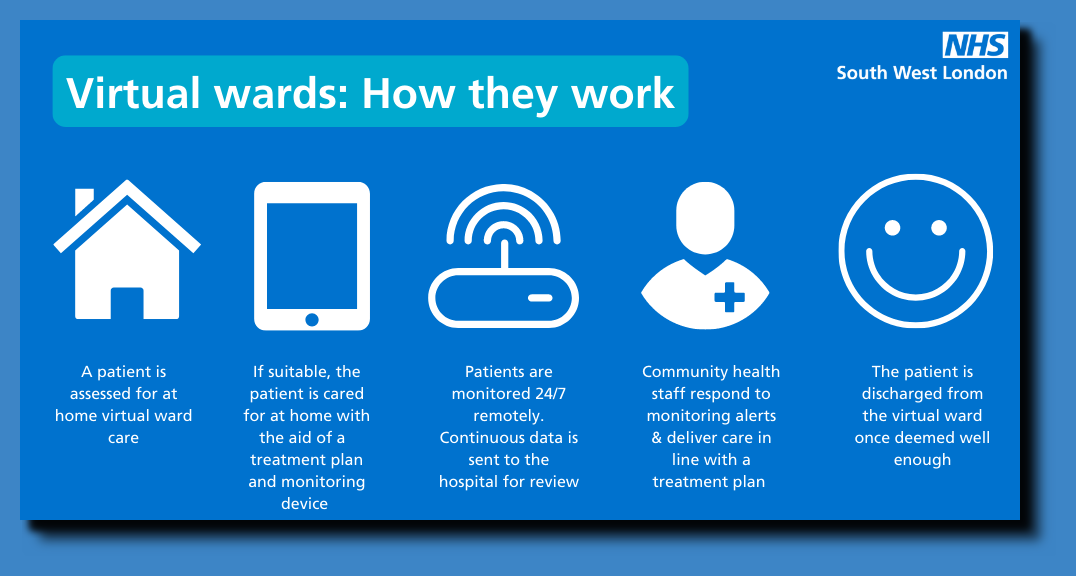
- In addition to primary care, virtual wards are also becoming more prevalent, with over 100,000 patients treated in virtual wards in the last year alone, according to NHS England.
- Virtual wards, also known as “hospital at home”, are a healthcare model that provides hospital-level care to patients in their own homes or care facilities, rather than in a traditional hospital setting. This is achieved through the use of technology for remote monitoring and support, allowing patients to receive care, monitoring, and treatment in a familiar environment while freeing up hospital beds.
References: The King’s Fund | NHS England.| Department of Health and Social Care (DHSC)|